
If your cardiologist has told you that you have left main coronary artery disease, you're probably feeling concerned. This is natural — the left main artery is often called the "widow maker" because of its critical importance. But here's what you need to know right away:
The Good News
With proper treatment, outcomes for left main disease are excellent. Both stenting (PCI) and bypass surgery (CABG) can successfully treat this condition. Research involving over 4,000 patients shows similar survival rates at 5 years for many patients.
In This Article
What Is Left Main Coronary Artery Disease?
Your heart has two main coronary arteries that supply it with blood: the left main coronary artery and the right coronary artery. The left main is special because it's like the trunk of a tree — it branches into two major arteries (the LAD and the circumflex) that together supply most of your heart muscle.
Think of It This Way
Imagine the blood supply to your heart like a highway system. The left main artery is the main highway — if it gets blocked, traffic can't flow to two major routes at once. That's why blockages here require careful treatment.
Left main coronary artery disease means there's a significant blockage (usually 50% or more) in this critical artery. This condition affects about 5-7% of patients who undergo coronary angiography, and in 70% of cases, there are also blockages in other arteries.
Why Is Left Main Disease Considered Serious?
75-80%
of your heart's blood supply comes through the left main artery in most people (when the right coronary artery is "dominant," which is the typical pattern).
Because the left main artery feeds such a large portion of your heart, a significant blockage here can:
- • Cause chest pain (angina) with activity or even at rest
- • Lead to shortness of breath
- • Increase the risk of heart attack if left untreated
- • Affect your heart's pumping strength over time
Important Context
While left main disease is serious, it's not a death sentence. Treatment has come a long way. With proper care — whether through stenting or bypass surgery — most patients return to normal, active lives.
Treatment Options: Stenting (PCI) vs Bypass Surgery (CABG)
For decades, bypass surgery was the only option for left main disease. Today, thanks to advances in stent technology and techniques, many patients have a choice. Let's understand both options:
Stenting (PCI - Percutaneous Coronary Intervention)
How It Works
A thin tube is inserted through your wrist or groin. A balloon opens the blockage, and a small metal mesh tube (stent) is placed to keep the artery open.
Recovery
Most patients go home the next day. Return to normal activities within a week. No chest incision needed.
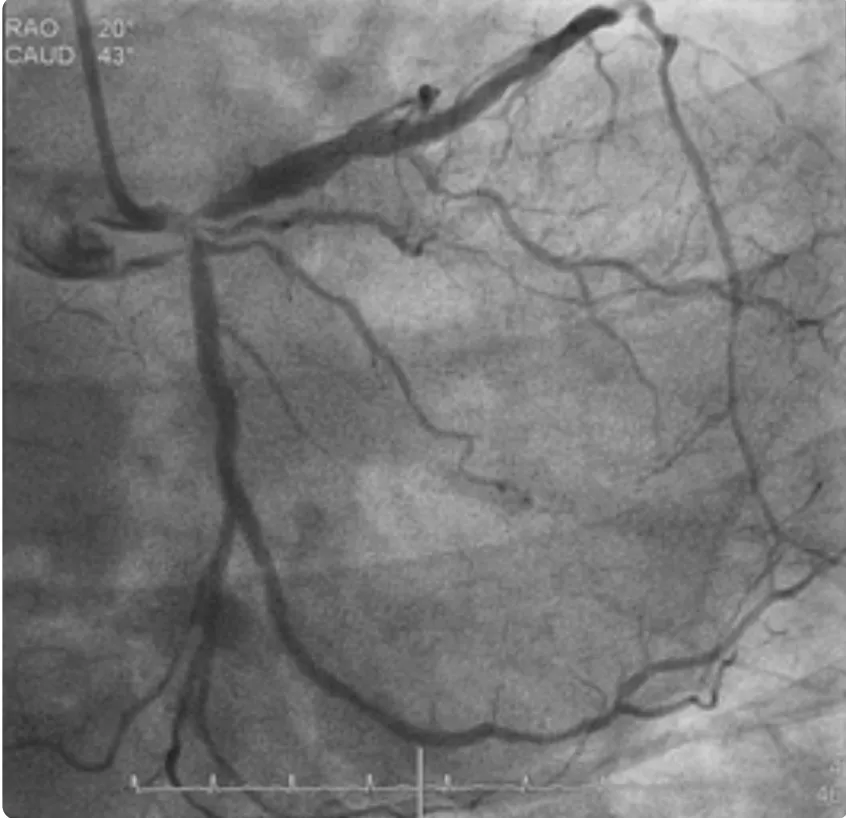
Left main stenting: The catheter delivers a drug-eluting stent to open the blocked artery and restore blood flow.
Bypass Surgery (CABG - Coronary Artery Bypass Grafting)
How It Works
A surgeon creates new routes for blood to flow around the blockage using arteries or veins taken from your chest, arm, or leg.
Recovery
Hospital stay of 5-7 days. Full recovery takes 6-12 weeks. Requires chest incision (sternotomy).
Quick Comparison
| Factor | Stenting (PCI) | Bypass (CABG) |
|---|---|---|
| Hospital stay | 1-2 days | 5-7 days |
| Full recovery | 1 week | 6-12 weeks |
| Stroke risk (first year) | Lower (~0.8%) | Higher (~2.5%) |
| Need for repeat procedure | Higher (~18% at 5 years) | Lower (~11% at 5 years) |
| 5-year survival | ~89% | ~90% |
What Does the Research Say?
Several landmark studies have compared stenting to bypass surgery for left main disease. Here are the key findings:
SYNTAX Trial (10-Year Follow-up)
Followed 1,800 patients for 10 years — the longest follow-up of any major trial.
Key finding: For patients with left main disease specifically, there was no significant difference in survival between stenting and bypass surgery.
Lancet Meta-Analysis (2021)
Combined data from 4,394 patients across 4 major trials (SYNTAX, PRECOMBAT, NOBLE, EXCEL).
Key findings:
- • 5-year death rates: 11.2% (stenting) vs 10.2% (bypass) — not statistically different
- • Stenting had lower stroke risk in the first year
- • Bypass had lower rates of heart attack and repeat procedures
SWEDEHEART Registry (2023)
Real-world data from 11,137 patients in Sweden — includes all types of patients, not just those eligible for trials.
Key finding: In this broader, real-world population, bypass surgery was associated with better outcomes. The benefit was especially pronounced in diabetic patients.
What This Means for You
The research suggests that for many patients with left main disease — especially those with lower complexity disease — stenting and bypass have similar survival outcomes. However, the "best" choice depends on your individual situation, including the location and complexity of your blockages, whether you have diabetes, and your overall health.
Choosing the Right Treatment
Factors That Favor Stenting (PCI)
Location of blockage — Disease in the "ostium" (opening) or "shaft" of the left main, rather than at the branch point
Lower complexity — SYNTAX score of 0-22, indicating simpler anatomy
Higher surgical risk — Other health conditions that make open surgery riskier
Patient preference — Strong desire to avoid open surgery and longer recovery
Factors That Favor Bypass Surgery (CABG)
Diabetes — Diabetic patients consistently show better outcomes with bypass
Multiple vessel disease — Blockages in other arteries beyond the left main
Higher complexity — SYNTAX score above 32, indicating complex anatomy
Weak heart muscle — Reduced pumping function (low ejection fraction)
Distal bifurcation disease — Disease at the point where the left main branches
The Heart Team Approach

The Heart Team brings together specialists to review your case and recommend the best treatment approach.
For left main disease, major guidelines (including those from the American College of Cardiology and European Society of Cardiology) recommend a "Heart Team" approach. This means:
Interventional Cardiologist
Stent specialist who reviews your angiogram
Cardiac Surgeon
Surgery specialist who assesses operative options
Your Cardiologist
Knows your overall health and preferences
Why This Matters
The Heart Team approach ensures you get unbiased advice. Rather than one specialist making the decision alone, multiple experts review your case. This leads to better outcomes and ensures you receive the treatment that's truly best for your situation.
Life After Treatment

After successful treatment, most patients return to active, fulfilling lives.
Whether you choose stenting or bypass surgery, the goal is the same: to restore blood flow to your heart so you can live a full, active life. Here's what to expect:
Medications
After either procedure, you'll take medications to protect your heart. These typically include:
- • Blood thinners (aspirin, and often a second antiplatelet medication after stenting)
- • Statins to lower cholesterol
- • Blood pressure medications if needed
- • Other medications based on your specific situation
Lifestyle Changes
Regardless of which treatment you have, lifestyle changes are essential for long-term success:
Heart-healthy diet
Low in saturated fats, rich in fruits, vegetables, and whole grains
Regular exercise
Cardiac rehabilitation is highly recommended
No smoking
Quitting is the single most important thing you can do
Control risk factors
Manage diabetes, blood pressure, and cholesterol
Long-term Outlook
With proper treatment and lifestyle changes, most patients with left main disease do very well. The 5-year survival rate is approximately 89-90% with either treatment approach. Many patients return to work, exercise, travel, and enjoy their families for many years after treatment.
Frequently Asked Questions
Is left main disease the most dangerous type of heart blockage? ▼
Left main blockages are considered high-risk because the left main artery supplies 75-80% of your heart's blood when the right artery is dominant (most people), or up to 100% if the left side is dominant. However, with proper treatment, outcomes are excellent. The key is getting the right treatment approach.
Can left main blockages be treated with stents instead of bypass surgery? ▼
Yes, stenting (PCI) is now a proven option for many patients with left main disease, especially when the blockage is in a favorable location and there aren't multiple other blockages. Research involving over 4,000 patients shows similar survival rates between stenting and bypass surgery at 5 years for many patients.
What is the SYNTAX score and why does it matter? ▼
The SYNTAX score is a way to measure how complex your coronary artery disease is. It considers the number, location, and severity of blockages. A low score (0-22) suggests stenting may work well. A high score (above 32) often means bypass surgery may provide better long-term results. Your Heart Team uses this to help guide recommendations.
What is a Heart Team and why is it important? ▼
A Heart Team typically includes an interventional cardiologist (stent specialist), a cardiac surgeon, and sometimes other specialists. For left main disease, guidelines recommend that both a cardiologist and surgeon review your case together to determine the best treatment approach. This ensures you get unbiased advice.
If I choose stenting, will I need repeat procedures more often than bypass? ▼
Research shows that patients who receive stents are more likely to need repeat procedures compared to bypass surgery (about 18% vs 11% at 5 years). However, most of these are planned, straightforward procedures. Some patients prefer stenting despite this, because the initial recovery is much faster.
Does having diabetes affect which treatment is better? ▼
Yes. Research, including the large SWEDEHEART registry, shows that diabetic patients with left main disease tend to have better outcomes with bypass surgery. If you have diabetes, your Heart Team will carefully consider this when making recommendations.
What is the recovery time difference between stenting and bypass? ▼
Recovery is dramatically different. After stenting, most patients go home the next day and return to normal activities within a week. After bypass surgery, hospital stay is typically 5-7 days, with full recovery taking 6-12 weeks. However, bypass surgery may provide more durable long-term results for certain patients.
Are there any advantages of stenting over bypass for left main disease? ▼
Stenting has a lower stroke risk in the first year (about 0.8% vs 2.5% for bypass). It's also less invasive, with faster recovery, no chest incision, and lower initial procedural risk. For patients with other health conditions that make open surgery risky, stenting can be an excellent alternative.
References
- Sabatine MS, et al. PCI with drug-eluting stents vs CABG in left main coronary artery disease: an individual patient data meta-analysis. Lancet. 2021;398(10318):2247-2257. PMID: 34793745
- Thuijs DJFM, et al. PCI vs CABG in patients with three-vessel or left main coronary artery disease: 10-year follow-up of the SYNTAX trial. Lancet. 2019;394(10206):1325-1334. PMID: 31488373
- Persson J, et al. PCI or CABG for left main coronary artery disease: the SWEDEHEART registry. Eur Heart J. 2023;44(30):2833-2842. PMID: 37288564
- Baydoun H, et al. Revascularization of Left Main Coronary Artery. Cardiovasc Revasc Med. 2019;20(11):1014-1019. PMID: 30553818
- Rajachandran M, Makhija R. PCI or CABG for Left Main Disease: Does Disease Location Matter? Curr Cardiol Rep. 2022;24(2):93-101. PMID: 35038131
- Taggart DP. PCI versus CABG in coronary artery disease. Vascul Pharmacol. 2024;155:107367. PMID: 38508356

About the Author
Dr. Shailesh Singh is a Senior Consultant Interventional Cardiologist with over 12 years of clinical experience, specializing in complex coronary interventions including left main stenting. He now practices at BLK-Max Super Speciality Hospital, New Delhi (formerly Consultant, Fortis Escorts Heart Institute), where he works closely with cardiac surgery colleagues in a Heart Team approach.
Learn more about Dr. Singh →Diagnosed with Left Main Disease?
Dr. Shailesh Singh specializes in complex coronary interventions, including left main stenting. Book a consultation to discuss your treatment options and get a Heart Team perspective.
Hospital: BLK-Max Super Speciality Hospital, New Delhi | Formerly Consultant, Fortis Escorts Heart Institute
Medical Disclaimer: This article is for informational purposes only and does not replace professional medical advice. Please consult with your cardiologist and cardiac surgeon about your specific condition and treatment options.