
You've been told you need a coronary angiography. Maybe your stress test showed something concerning. Maybe you've been having chest pain that needs answers. Or perhaps your doctor wants to check how your heart arteries are doing after a previous treatment.
Here's the good news: coronary angiography is one of the most well-established heart procedures in medicine. Millions are performed worldwide every year. And in most cases, you'll be going home the same day or the next morning.
In This Article
What Is Coronary Angiography?
Coronary angiography (also called a coronary angiogram or cardiac catheterization) is a special X-ray test that shows the inside of your heart's blood vessels.
Think of it like this: Imagine you want to check if any pipes in your house are blocked. You might use a tiny camera or push some colored water through to see where the flow stops. Coronary angiography works on a similar principle—except instead of pipes, we're looking at the arteries that supply blood to your heart.
During the procedure, a thin, flexible tube called a catheter is threaded through a blood vessel (usually in your wrist or groin) and guided to your heart. A special dye is injected that shows up on X-rays, creating a real-time "road map" of your coronary arteries.
This test can show:
- • Blockages — Where and how severe they are
- • Narrowing — Even partial blockages that might cause problems later
- • Blood flow — How well blood is moving through your heart
- • Heart muscle function — How strongly your heart is pumping
Why Might You Need a Coronary Angiography?
1. To Find the Cause of Symptoms
- • Chest pain or discomfort (angina)
- • Shortness of breath that's unexplained
- • Unusual fatigue during physical activity
2. After an Abnormal Test Result
- • Abnormal stress test (TMT)
- • Concerning ECG changes
- • Echo showing heart muscle not moving properly
3. Before Heart Surgery
- • To plan bypass surgery
- • Valve repair or replacement planning
- • Deciding between bypass and stenting
4. Emergency Situations
During a heart attack, angiography helps locate the blocked artery so it can be opened immediately.
The Two Access Points: Wrist vs. Groin
One of your first questions might be: "Where exactly will the tube go in?" There are two common entry points:
Radial Access (Wrist) — Preferred
- ✓ You can sit up right after
- ✓ Walk around within hours
- ✓ Lower risk of bleeding complications
- ✓ More comfortable
- ✓ Most go home same day
Femoral Access (Groin)
Used when:
- • Wrist arteries are too small
- • Complex procedures needed
- • Some emergency situations
Requires lying flat for several hours afterward.
Dr. Shailesh Singh's Approach: "I prefer the radial (wrist) approach for most of my patients. Research shows it has significantly fewer complications—nearly 190,000 patients studied found wrist access safer with fewer bleeding issues and better overall outcomes."

Compassionate care from the medical team helps patients feel comfortable and supported throughout the procedure.
Preparing for Your Coronary Angiography
The Night Before
- • Don't eat or drink after midnight
- • Take regular medications with small sips of water
- • Ask about blood thinners — some may need stopping
- • Get a good night's sleep
What to Bring
- • List of all medications
- • Previous test reports and scan CDs
- • Someone to drive you home
- • Comfortable, loose clothing
Medications to Discuss with Your Doctor:
- • Blood thinners (warfarin, aspirin, clopidogrel)
- • Diabetes medications (especially metformin)
- • Any allergies, especially to iodine or contrast dye
What Happens During the Procedure?
Arrival and Preparation (30-45 min)
You'll change into a hospital gown. A nurse will start an IV, attach heart monitors, and give you a mild sedative. You'll be awake but drowsy.
Local Anesthetic
The area where the catheter will enter is numbed. You'll feel a pinch and brief sting, then the area goes numb.
Inserting the Catheter
A small tube is placed in the artery. The catheter is gently advanced toward your heart. You shouldn't feel the catheter moving—many patients are surprised by how little they feel.
The Dye Injection
Contrast dye is injected. What you'll feel: A brief warm, flushing sensation lasting 10-20 seconds. Some describe it as a "warm wave"—completely normal.
Taking Pictures
Multiple X-ray images from different angles. You may be asked to hold your breath briefly. The whole procedure takes 15-30 minutes.
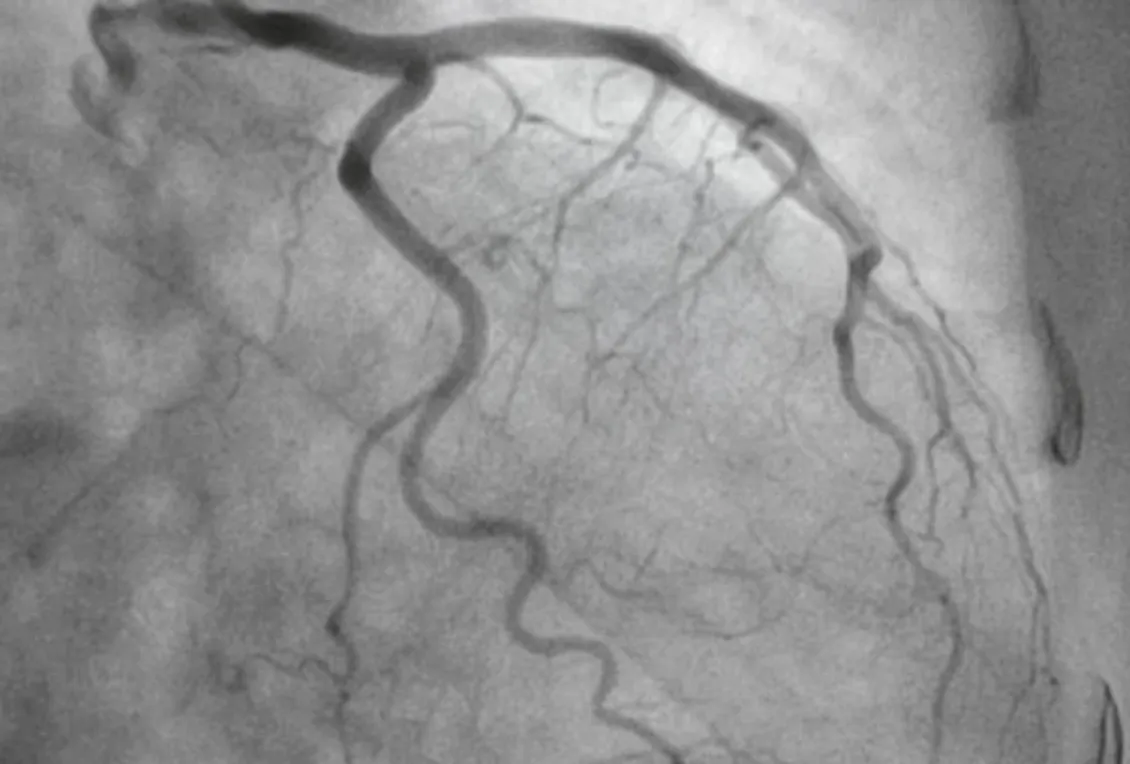
What the doctor sees: A coronary angiogram showing the heart's blood vessels illuminated by contrast dye.

Family members typically wait 1-2 hours while the procedure is performed. The medical team will update them promptly.
What Do the Results Show?
If Arteries Are Clear
Great news! Your symptoms likely have another cause, and you can feel reassured about your heart arteries.
If Blockages Are Found
- • Mild (less than 50%): Usually managed with medications and lifestyle
- • Moderate (50-70%): May need further testing
- • Severe (more than 70%): Often requires treatment—stenting or bypass
Treatment During the Same Procedure: In many cases, if a significant blockage is found, your doctor can treat it during the same procedure with angioplasty and stenting—saving you from needing a second procedure.
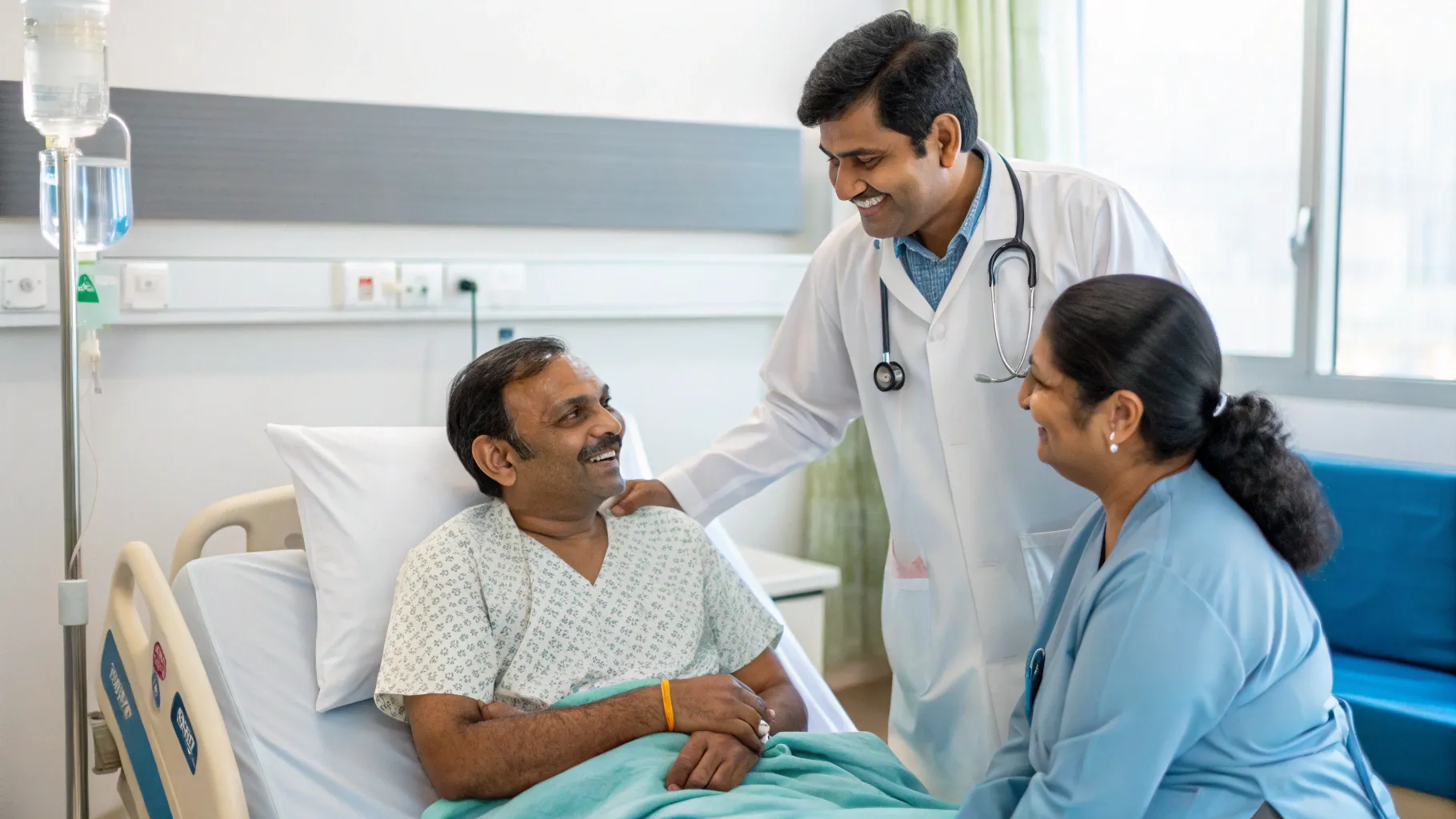
After the procedure, your cardiologist will discuss the findings and next steps with you and your family.
Recovery: What to Expect
| Timeline | What to Expect |
|---|---|
| First few hours | Rest in recovery area, vital signs monitored |
| 4-6 hours (wrist) | Pressure band gradually loosened, most go home |
| First 24-48 hours | Take it easy, no heavy lifting, stay hydrated |
| 2-3 days | Return to desk work, light activities |
| 1-2 weeks | Full activities, exercise (start slowly) |
When to Call Your Doctor:
- • Increasing swelling or growing lump at access site
- • Bleeding that won't stop
- • Numbness, coldness, or color change in hand/foot
- • Chest pain or shortness of breath
- • Fever or chills
Are There Any Risks?
Coronary angiography is very safe when performed by experienced cardiologists. The overall risk of serious complications is approximately 1 in 1,000 in experienced centers.
Common (Minor)
- • Bruising at access site
- • Minor bleeding
- • Temporary soreness
Less Common
- • Allergic reaction to dye
- • Temporary kidney stress
- • Brief irregular rhythm
Rare (<1%)
- • Major bleeding
- • Heart attack
- • Stroke
Coronary Angiography vs. CT Angiography
| Feature | Catheter Angiography | CT Angiography |
|---|---|---|
| Invasiveness | Minimally invasive (catheter) | Non-invasive (just IV) |
| Accuracy | Gold standard | Very good |
| Treatment possible? | Yes, can stent during | No—diagnosis only |
| Best for | Confirming disease, treatment | Screening, ruling out disease |
Frequently Asked Questions
Is coronary angiography painful? ▼
Most patients experience minimal discomfort. The local anesthetic stings briefly, and you may feel pressure at the access site. The warm sensation from the contrast dye is unusual but not painful. Many patients are surprised by how comfortable the procedure is.
How long will I be in the hospital? ▼
For diagnostic angiography, most patients go home the same day (4-6 hours after the procedure). If treatment like stenting is done, you may stay overnight.
Will I be asleep during the procedure? ▼
No, you'll be awake but sedated—relaxed and drowsy. General anesthesia isn't usually needed, which makes recovery faster.
How soon can I return to work? ▼
For desk jobs, most people return within 2-3 days. If your work involves physical labor, you may need 1-2 weeks.
Is the radiation exposure dangerous? ▼
The radiation dose is carefully minimized and similar to a few chest X-rays. The diagnostic benefit far outweighs the small radiation risk, especially when the procedure is clinically indicated.
What if I'm allergic to contrast dye? ▼
Tell your doctor beforehand. Pre-treatment with medications can significantly reduce allergic reactions. Alternative contrast agents are also available.
Can angiography detect all heart problems? ▼
It's specifically designed to show blockages in the coronary arteries. Other heart problems (like valve issues or heart muscle disease) require different tests like echocardiography.
Can I eat before the procedure? ▼
You'll typically need to fast (no food or water) for 6-8 hours before the procedure. Your doctor will give specific instructions.
References
- Reifart J, et al. Acceptance and safety of femoral versus radial access for PCI: results from a large German registry (QuIK). BMC Cardiovasc Disord. 2022;22(1):7. PMID: 35016644
- Samul W, et al. Comparison of safety of radial and femoral approaches for coronary catheterization. Med Sci Monit. 2015;21:1464-8. PMID: 25996689
- Nance JW Jr, et al. Coronary CTA in chronic chest pain: systematic review of evidence and cost-effectiveness. J Thorac Imaging. 2012;27(5):277-88. PMID: 22914121
- Hyasat K, et al. Safety, Feasibility and Economic Analysis of Same Day Discharge Following Elective PCI. Clin Med Insights Cardiol. 2022;16. PMID: 36046181
- Thomas DM, et al. PROMISE of Coronary CT Angiography: Diagnosis and Prognosis in CAD. South Med J. 2016;109(4):242-7. PMID: 27043808

About the Author
Dr. Shailesh Singh is a Senior Consultant Interventional Cardiologist with over 12 years of clinical experience, performing coronary angiography and complex interventions. He now practices at BLK-Max Super Speciality Hospital, New Delhi (formerly Consultant, Fortis Escorts Heart Institute), where he has performed thousands of diagnostic and therapeutic cardiac catheterizations.
Learn more about Dr. Singh →Need a Coronary Angiography?
If you've been advised to undergo angiography or have questions about your heart health, Dr. Shailesh Singh provides expert evaluation and care with a patient-first approach.
Hospital: BLK-Max Super Speciality Hospital, New Delhi | Formerly Consultant, Fortis Escorts Heart Institute
Medical Disclaimer: This article is for informational purposes only and should not be considered medical advice. Always consult with a qualified healthcare provider for diagnosis and treatment of any medical condition.