When your doctor says you need an "echo test," it's natural to feel anxious. What exactly will they see? Will it hurt? What do the results mean?
Take a deep breath. Echocardiography (commonly called an echo or cardiac ultrasound) is one of the safest, most informative heart tests available. It uses sound waves—not radiation—to create moving pictures of your heart. In about 15 to 20 minutes, your doctor can see your heart beating, watch your valves open and close, and measure how well your heart pumps blood.
In This Article
What Is Echocardiography?
Echocardiography is an ultrasound scan of your heart. Think of it as the same technology used to see babies during pregnancy, but focused on your heart instead.
During the test, a small handheld device called a transducer sends harmless sound waves into your chest. These waves bounce off your heart structures and return to create real-time video images on a screen. Your doctor can watch your heart pump, see blood flowing through the chambers, and check if your valves are working properly.
You'll only feel light pressure from the probe
Unlike X-rays or CT scans, no radiation exposure
Nothing enters your body (for standard echo)
Usually takes only 10 to 20 minutes
Types of Echocardiography
Not all echo tests are the same. Your doctor will choose the type based on what they need to see.
1. Transthoracic Echocardiography (TTE) — The Standard Echo
This is the most common type. The technician places the transducer on different areas of your chest while you lie on an examination table. Gel is applied to help the sound waves travel better.
2. Doppler Echocardiography
This specialized technique is usually done during a regular echo. It measures the speed and direction of blood flow through your heart chambers and valves. On the screen, blood flow appears in different colors—red for blood moving toward the probe, blue for blood moving away.
3. Transesophageal Echocardiography (TEE)
For some conditions, your doctor needs a closer look. In TEE, a thin, flexible tube with a tiny ultrasound probe is passed down your throat into your esophagus (the food pipe that runs behind your heart). This provides extremely clear images because there are no ribs or lungs blocking the view.
Before the test, your throat is numbed with a spray, and you may receive mild sedation to help you relax. The test takes about 10 to 30 minutes.
Research published in the Journal of Intensive Care Medicine found that TEE provides additional diagnostic information beyond standard echo in up to 78% of cases where clearer images are needed.
4. Stress Echocardiography
This combines a regular echo with exercise or medication to see how your heart performs under stress. You'll have an echo before and immediately after walking on a treadmill or receiving a drug that makes your heart beat faster.
According to the European Association of Cardiovascular Imaging, stress echo is particularly valuable because it's low-cost, versatile, and doesn't require radiation exposure—making it a sustainable choice for heart testing.
5. 2D and 3D Echocardiography
Traditional echo creates 2D (flat) images of your heart. Newer 3D technology produces more lifelike, detailed views that can be rotated and examined from any angle.
What Does an Echo Test Show?
Your heart is more than just a pump—it's a complex organ with four chambers, four valves, and a network of blood vessels. An echo can evaluate all of these.
Heart Structure
- Chamber size — Are your heart chambers the right size, or enlarged?
- Wall thickness — Is your heart muscle too thick or too thin?
- Valve appearance — Are your valves opening and closing properly?
- Pericardium — Is there fluid around your heart?
Heart Function
- Ejection fraction (EF) — The percentage of blood pumped out with each heartbeat. Normal is 55-70%.
- Strain imaging — Newer technology that can detect subtle problems even when EF appears normal.
Blood Flow
- Valve function — Detect regurgitation (leaking) or stenosis (narrowing)
- Pressure measurements — Estimate blood pressure inside your heart and lungs
- Abnormal connections — Find holes between heart chambers
Studies in JACC: Cardiovascular Imaging show that strain imaging can catch early heart disease before traditional measurements do.
Why Would Your Doctor Order an Echo?
Echocardiography is one of the most commonly ordered heart tests. Here are the main reasons:
Symptoms You're Experiencing
- • Shortness of breath
- • Chest pain or discomfort
- • Irregular heartbeat or palpitations
- • Swelling in your legs or ankles
- • Fainting or near-fainting episodes
- • Fatigue or reduced exercise tolerance
Abnormal Findings on Other Tests
- • Heart murmur heard with a stethoscope
- • Abnormal ECG (electrocardiogram)
- • Enlarged heart on chest X-ray
- • Elevated heart biomarkers in blood tests
Monitoring Known Heart Conditions
- • After a heart attack
- • Heart failure management
- • Valve disease follow-up
- • Cardiomyopathy (heart muscle disease)
- • Before and after heart procedures
Screening in High-Risk Patients
- • Family history of heart disease
- • Before major surgery
- • During cancer treatment
- • Athletes undergoing sports physicals
How to Prepare for Your Echo Test
Preparation depends on the type of echo you're having.
For Standard (Transthoracic) Echo
- • No special preparation needed — You can eat, drink, and take your medications normally
- • Wear comfortable, loose clothing
- • Avoid lotions or oils on your chest
For Transesophageal Echo (TEE)
- • Don't eat or drink for at least 6 hours before the test
- • Arrange for someone to drive you home (you'll receive sedation)
- • Inform your doctor about any swallowing problems or esophagus conditions
- • Tell your doctor if you have a dental prosthesis or loose teeth
For Stress Echo
- • Wear comfortable shoes if you'll be walking on a treadmill
- • Avoid caffeine for 24 hours before the test
- • Your doctor may ask you to stop certain heart medications temporarily
- • Don't eat a heavy meal for 3 hours before the test
What to Expect During the Test
During a Standard Echo
You'll lie on your left side on an examination table. Sometimes you'll be asked to shift positions or hold your breath briefly.
The technician applies gel to your chest. It may feel cool but warms up quickly.
The transducer is pressed against different areas of your chest. You may feel some pressure, but it shouldn't hurt.
You'll hear swooshing sounds — these are the sound waves bouncing off your heart. You might also hear your own heartbeat amplified.
The test takes 10 to 20 minutes. You'll be able to go home immediately afterward.
During a TEE
1. Your throat is numbed with a spray, and you may receive medication through an IV to help you relax.
2. A thin, flexible probe is guided down your throat. This may feel uncomfortable, but the sedation helps.
3. The test takes 10 to 30 minutes. Afterward, you'll rest until the sedation wears off.
4. Your throat may feel sore for a few hours. Avoid eating or drinking for at least an hour until the numbness goes away.
Understanding Your Results
After the test, a cardiologist reviews the images and creates a detailed report. Here's what some common findings mean:
Ejection Fraction (EF)
| EF Value | What It Means |
|---|---|
| 55-70% | Normal heart pumping |
| 40-54% | Mildly reduced (may need monitoring) |
| 30-39% | Moderately reduced (treatment usually needed) |
| Below 30% | Severely reduced (significant heart weakness) |
Valve Findings
- "Trace" or "trivial" regurgitation — Very mild leaking, often normal
- "Mild" abnormality — Usually doesn't need immediate treatment
- "Moderate" or "severe" — May require medication or surgery
Other Common Terms
Your heart muscle is contracting properly
Reduced movement (may indicate past heart damage)
Your heart isn't relaxing normally
Fluid around the heart
Is Echocardiography Safe?
Yes. Standard echocardiography has no known risks. It uses sound waves, not radiation, making it completely safe even for:
- • Pregnant women
- • Children
- • People needing repeated tests over time
TEE carries slightly more risk because a probe is placed in your esophagus. Rare complications include:
- • Sore throat (common and temporary)
- • Gastrointestinal bleeding (very rare, about 0.03%)
- • Esophageal injury (extremely rare with experienced operators)
Frequently Asked Questions
How long does an echocardiogram take? ▼
A standard echo takes 10 to 20 minutes. Stress echo takes 60 to 90 minutes including the exercise portion. TEE typically takes 10 to 30 minutes, plus recovery time.
Is echo the same as ECG? ▼
No. An ECG (electrocardiogram) records the electrical signals of your heart using stickers on your chest. An echo uses ultrasound waves to create actual images of your heart's structure. They provide different information and are often done together.
Will I get my results immediately? ▼
Usually not on the spot. The images need to be reviewed by a cardiologist. You'll typically get results within a few days, or at your follow-up appointment.
Can echo detect blocked arteries? ▼
Not directly. Echo shows how well your heart is pumping, not the arteries themselves. However, if a blockage has caused heart damage or weak pumping, the echo can detect that. A stress echo can suggest blocked arteries by showing areas that don't move normally during exercise.
How often do I need an echo? ▼
This depends on your condition. Some people need only one echo ever. Others with heart conditions may need them yearly or even more frequently to monitor changes.
Can I drive after an echo? ▼
After a standard or stress echo, yes. After a TEE, no—you'll need someone to drive you home because of the sedation.
Why does the technician press so hard? ▼
The transducer needs good contact with your skin to get clear images. Some areas require more pressure, especially if you have a larger body frame or lungs blocking the view. Tell the technician if it's too uncomfortable.
Is there any alternative to echo? ▼
For some purposes, cardiac MRI or CT scans can provide similar information. However, echo remains the first choice because it's widely available, affordable, doesn't use radiation, and can be done at the bedside.
References
- Picano E, Pierard L, Peteiro J, et al. The clinical use of stress echocardiography in chronic coronary syndromes and beyond coronary artery disease. Eur Heart J Cardiovasc Imaging. 2024;25(2):e65-e90. PMID: 37798126
- Prager R, Bowdridge J, Pratte M, et al. Indications, Clinical Impact, and Complications of Critical Care Transesophageal Echocardiography: A Scoping Review. J Intensive Care Med. 2023;38(3):245-272. PMID: 35854414
- Smiseth OA, Rider O, Cvijic M, et al. Myocardial Strain Imaging: Theory, Current Practice, and the Future. JACC Cardiovasc Imaging. 2025;18(3):340-381. PMID: 39269417
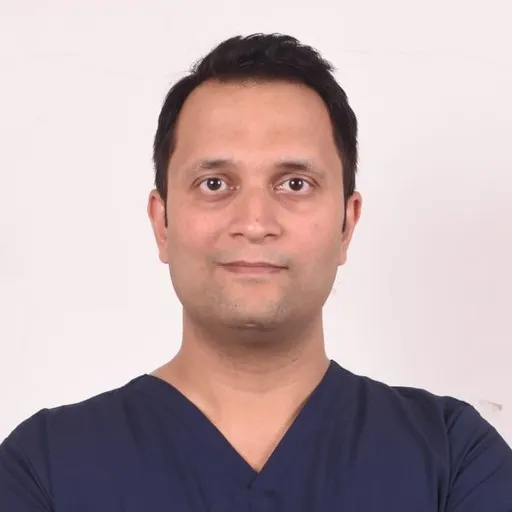
About the Author
Dr. Shailesh Singh is a Senior Consultant Interventional Cardiologist at BLK-Max Super Speciality Hospital, New Delhi, and formerly Consultant at Fortis Escorts Heart Institute. With extensive experience in cardiac imaging and echocardiography, he provides comprehensive heart evaluation for patients across Delhi NCR.
Learn more about Dr. Singh →Need an Echocardiography Test?
If you've been advised to get an echo test or are experiencing heart symptoms, Dr. Shailesh Singh offers comprehensive cardiac imaging services with same-week appointments.
Hospital: BLK-Max Super Speciality Hospital, New Delhi | Formerly Consultant, Fortis Escorts Heart Institute
Medical Disclaimer: This article is for informational purposes only and should not be considered medical advice. Every patient's situation is unique. Always consult with a qualified healthcare provider for diagnosis and treatment of any medical condition.