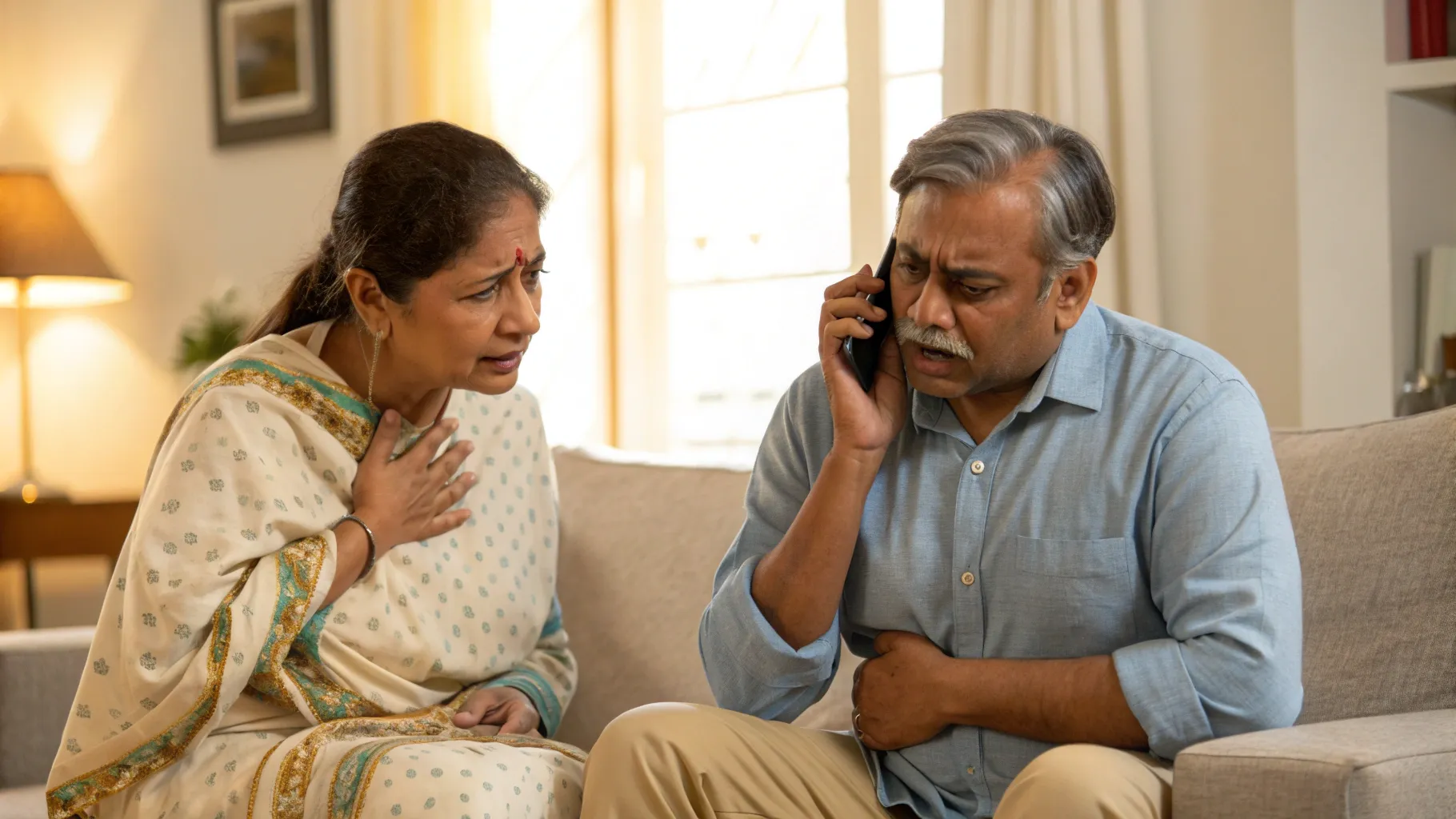
When a heart attack strikes, every minute counts. Your heart muscle is dying, and the clock is ticking. Primary PCI (Percutaneous Coronary Intervention) is the emergency procedure that can save your life—but only if it's done fast enough.
Primary PCI is emergency angioplasty performed during a heart attack. The word "primary" means it's the first and main treatment—not a backup option.
In This Article
What Is Primary PCI?
A heart attack occurs when a blood clot suddenly blocks one of the arteries feeding your heart. Without blood, the heart muscle starts dying within minutes. Primary PCI reopens that blocked artery using a balloon and usually a stent (a tiny metal mesh tube that keeps the artery open).
Think of it like emergency plumbing: your heart's blood vessel is suddenly blocked, and the doctor quickly clears the blockage so blood can flow again.
Why Is It Called "Primary" PCI?
The term "primary" distinguishes this from other types of angioplasty:
- • Primary PCI: Done as the first treatment during a heart attack
- • Rescue PCI: Done when clot-busting drugs fail to work
- • Elective PCI: Planned in advance for stable blockages
Why Time Is Everything: The "Golden Hour"
During a heart attack, doctors often say "time is muscle." This isn't just a saying—it's medical reality.

Every minute counts during a heart attack. Ambulances are equipped to begin treatment immediately.
Research shows that the first 2-3 hours after a heart attack begins are the most critical. During this window, restoring blood flow can save the largest amount of heart muscle. After this period, every additional hour of delay means more permanent damage.
Every 30-minute delay in treatment increases the risk of death and permanent heart damage. The sooner blood flow is restored, the more heart muscle is saved.
Understanding Door-to-Balloon Time
Hospitals measure a crucial metric called "door-to-balloon time"—the time from when you arrive at the hospital to when the balloon opens your blocked artery. The goal is under 90 minutes.
< 90 minutes
The target door-to-balloon time. Shorter times mean better outcomes and more heart muscle saved.
Studies involving thousands of patients have shown:
Shorter D2B Times
= Lower death rates
Every 30-Min Delay
= Increased mortality risk
Treatment Within 90 Min
= Best patient outcomes
Integrated Systems
= Reduced D2B by ~10 minutes
A study from Taiwan found that hospitals using integrated activation systems reduced their door-to-balloon time from about 77 minutes to 67 minutes—and patients had shorter hospital stays as a result.
When Is Primary PCI Needed?
Primary PCI is specifically used for a type of heart attack called STEMI (ST-Elevation Myocardial Infarction). This is diagnosed by an ECG (electrocardiogram) that shows a specific pattern indicating a major blockage.
Call for an Ambulance Immediately If You Experience:
- ⚠Crushing chest pain lasting more than a few minutes
- ⚠Pain spreading to your arm, jaw, neck, or back
- ⚠Shortness of breath with or without chest discomfort
- ⚠Cold sweat, nausea, or lightheadedness
- ⚠A sense of impending doom
Important for Women
Women often have subtler symptoms like unusual fatigue, back pain, or indigestion. Don't dismiss these—call for help.
What Happens During Primary PCI?
Understanding the procedure can reduce fear and help you cooperate with the medical team.
Step 1: Rapid Diagnosis (Minutes)
When you arrive at the emergency department with chest pain:
- • An ECG is performed within minutes
- • Blood tests check for heart damage markers
- • If STEMI is confirmed, the cath lab team is activated immediately
Step 2: Preparation (10-15 Minutes)
- • You're given blood-thinning medications (aspirin, heparin)
- • A small area on your wrist or groin is numbed with local anesthesia
- • You remain awake but may receive mild sedation
Step 3: Accessing the Blocked Artery
The doctor inserts a thin, flexible tube (catheter) through an artery in your wrist (radial access) or groin (femoral access). Most centers now prefer the wrist because:
Sit up sooner
Lower bleeding risk
Faster recovery
Step 4: Finding and Opening the Blockage
Using X-ray guidance, the catheter is threaded through your arteries to your heart. Contrast dye helps visualize exactly where the blockage is. Then:
- A thin wire crosses the blockage
- A tiny balloon is inflated to push the clot and plaque aside
- A stent is placed to keep the artery open
- Blood flow is restored
The moment blood flows again is called "reperfusion"—and it's when your heart muscle stops dying.
Step 5: Confirming Success
The doctor takes final images to confirm good blood flow. The catheter is removed, and pressure is applied to the insertion site to prevent bleeding.
After the Procedure: What to Expect

The moment of relief—when the doctor confirms the procedure was successful and blood flow has been restored.
In the Hospital (2-4 Days)
- • First few hours: You'll be monitored in a cardiac care unit
- • If wrist access was used: You may be able to sit up within hours
- • Echo test: An ultrasound checks how well your heart is pumping
- • Blood tests: Monitor for any complications
- • Medications: You'll start on several heart-protective drugs
Medications You'll Take
| Medication | Purpose | Duration |
|---|---|---|
| Aspirin | Prevents clots | Lifelong |
| P2Y12 inhibitor (clopidogrel) | Prevents stent clots | Usually 12 months |
| Statin | Lowers cholesterol | Lifelong |
| Beta-blocker | Protects heart | Usually long-term |
| ACE inhibitor | Supports heart function | Often long-term |
Critical Warning
Never stop your blood-thinning medications without talking to your doctor. Stopping too early can cause a clot to form inside the stent—which can be life-threatening.
Success Rates and Outcomes
Primary PCI has transformed heart attack survival:
>90%
Technical success rate for opening blocked arteries
>95%
Survival rate when performed quickly
Better
vs clot-busting drugs for deaths, repeat attacks, strokes
However, outcomes depend heavily on timing. A study from Somalia highlighted the challenges in resource-limited settings—when door-to-balloon times averaged 169 minutes (nearly 3 hours), mortality reached 24%. This underscores why getting to a capable hospital quickly is so important.
Risks and Complications
Common (Minor)
- • Bruising at insertion site
- • Minor bleeding
- • Mild allergic reaction to dye
Rare (Serious)
- • No-reflow phenomenon (5-10%)
- • Bleeding requiring transfusion
- • Kidney problems from dye
- • Stroke (<1%)
Primary PCI vs. Clot-Busting Drugs
In some situations, doctors must choose between primary PCI and clot-busting drugs (also called thrombolytics or fibrinolysis).
| Factor | Primary PCI | Clot-Busting Drugs |
|---|---|---|
| Where given | Hospitals with cath labs | Any hospital or ambulance |
| Time to treatment | Needs 90-minute window | Can be given immediately |
| Effectiveness | Opens artery in >90% | Opens artery in 50-60% |
| Bleeding risk | Lower | Higher (especially brain) |
Current guidelines recommend primary PCI when it can be performed within 120 minutes of first medical contact. If longer delays are expected, clot-busting drugs may be considered first, followed by transfer for angiography.
Life After Primary PCI
Surviving a heart attack treated with primary PCI is just the beginning. Your focus shifts to preventing another event.

Life reclaimed—returning to the moments that matter most after successful treatment.
Cardiac Rehabilitation
A structured program that includes:
Supervised exercise training
Education about heart-healthy living
Emotional support and counseling
Gradual return to normal activities
Studies show cardiac rehab reduces the risk of future heart problems by 20-30%.
Lifestyle Changes
| Change | Target |
|---|---|
| Quit smoking | Complete cessation |
| Blood pressure | Below 130/80 mmHg |
| LDL cholesterol | Below 70 mg/dL (or 55 for very high risk) |
| Exercise | 150 minutes moderate activity weekly |
| Diet | Mediterranean or DASH diet |
Frequently Asked Questions
Is primary PCI painful? ▼
The procedure itself is not painful because local anesthesia numbs the insertion site. You may feel pressure when the catheter moves through your arteries, and some patients feel brief chest discomfort when the balloon is inflated. You'll be given medications to keep you comfortable.
How long does primary PCI take? ▼
The actual procedure typically takes 30-60 minutes, though preparation and post-procedure care add to the total time. The critical "door-to-balloon" time (arrival to opening the artery) should be under 90 minutes.
Can I have primary PCI if I'm allergic to contrast dye? ▼
Yes, but precautions are needed. You'll receive medications before the procedure to reduce the risk of a reaction. In emergencies, the life-saving benefit outweighs the allergy risk.
What if the nearest hospital doesn't do primary PCI? ▼
Ambulance teams are trained to take STEMI patients directly to PCI-capable hospitals when possible. If you're already at a non-PCI hospital, you may be transferred urgently. In some cases, clot-busting drugs are given first during transfer.
Will I need another procedure later? ▼
About 5-10% of patients may need another procedure within a year, either because of problems with the stent or new blockages elsewhere. Regular follow-up helps catch any issues early.
How soon can I return to work? ▼
This depends on your job and how well you recover. Many people with desk jobs return within 2-4 weeks. Physical labor may require 6-8 weeks or longer. Your cardiologist will guide you.
Is primary PCI better than bypass surgery during a heart attack? ▼
For most heart attacks, primary PCI is preferred because it's faster and less invasive. However, some patients (especially those with multiple severe blockages or complications) may need bypass surgery later.
What is the success rate of primary PCI? ▼
When performed by experienced teams within the recommended time, primary PCI opens the blocked artery in over 90% of cases. Survival rates exceed 95% when treatment is timely.
References
- Tseng HL, et al. Impact of the Integrated Activation System on Door-to-Balloon Times and Clinical Outcomes in STEMI Patients Receiving Primary PCI. Acta Cardiol Sin. 2024;40(1):97-110. PMID: 38264068
- Rashid MK, et al. Off-Hours Presentation, Door-to-Balloon Time, and Clinical Outcomes in Patients Referred for Primary Percutaneous Coronary Intervention. J Invasive Cardiol. 2023;35(4):E185-E193. PMID: 36827083
- Shah K, et al. Door-to-Balloon Time in ST-Elevation Myocardial Infarction (STEMI) Patients Undergoing Primary Angioplasty. Cureus. 2024;16(6):e62222. PMID: 39006684
- Hassan MO, et al. Door-to-Balloon Time and Mortality Among Patients Undergoing Primary PCI. Int J Gen Med. 2024;17:237-244. PMID: 38283076
- Terkelsen CJ. Time to treatment - door-to-balloon time is not everything. Herz. 2014;39(6):672-6. PMID: 24980984
- Stiermaier T, et al. Reperfusion strategies in ST-segment elevation myocardial infarction. Minerva Med. 2013;104(4):391-411. PMID: 24008602
- Gersh BJ, et al. Pharmacological facilitation of primary percutaneous coronary intervention for acute myocardial infarction. JAMA. 2005;293(8):979-86. PMID: 15728169

About the Author
Dr. Shailesh Singh is a Senior Consultant Interventional Cardiologist with over 12 years of clinical experience. He specializes in emergency angioplasty (primary PCI) for heart attack patients and has performed thousands of life-saving procedures. He now practices at BLK-Max Super Speciality Hospital, New Delhi (formerly Consultant, Fortis Escorts Heart Institute).
Learn more about Dr. Singh →Need Emergency Cardiac Care?
Dr. Shailesh Singh leads the 24/7 emergency cardiac care team. For heart attack emergencies, call an ambulance immediately. For cardiac consultations and preventive care, book an appointment.
Hospital: BLK-Max Super Speciality Hospital, New Delhi | Formerly Consultant, Fortis Escorts Heart Institute
Medical Disclaimer: This article is for informational purposes only and should not be considered medical advice. If you're experiencing symptoms of a heart attack, call emergency services (102/108) immediately.