
If your cardiologist has mentioned "rotational atherectomy" or "rotablation," you're probably facing a challenging situation: your coronary arteries have become so heavily calcified that standard treatments may not work. This can feel overwhelming, but understanding what lies ahead can help ease your concerns.
Rotational atherectomy uses a tiny, diamond-coated burr spinning at 140,000-180,000 rotations per minute to gently shave away hardened calcium deposits, preparing your artery for a stent.
In This Article
What Is Rotational Atherectomy?
Rotational atherectomy is a specialized technique used during angioplasty to treat severely hardened, calcified blockages in your heart's arteries. Think of it as a precision tool that prepares the way for a stent.
Here's a helpful analogy: Imagine trying to install a new water pipe inside an old, heavily rusted one. The rust is so thick and hard that you can't simply push a flexible tube through. You need to smooth out that hard deposit first. That's exactly what rotational atherectomy does inside your arteries.
How the Rotablator Works
The device is a tiny, diamond-coated burr (about 1-2 mm in diameter) attached to a flexible drive shaft. When activated, this burr spins at incredibly high speeds—about 140,000 to 180,000 rotations per minute—to gently shave away the hardened calcium deposits.
The calcified particles created are microscopic (smaller than a red blood cell) and are safely absorbed by your body over time.
Why Do Arteries Become Calcified?
As we age, calcium can build up in our artery walls. This process, called coronary artery calcification, is particularly common in:
Older patients
Especially those over 70 years
People with diabetes
Accelerated calcification process
Chronic kidney disease
Mineral metabolism issues
Long-standing hypertension
Years of high blood pressure

For families, the waiting can be the hardest part—but modern techniques make these procedures safer than ever.
Why Calcification Matters
Calcified arteries are especially challenging because the hardened deposits resist the pressure of regular balloons used during angioplasty. When a balloon can't fully expand, the stent may not deploy properly, leading to treatment failure or complications.
When Is Rotational Atherectomy Needed?
Rotational atherectomy isn't used for every blockage. It's specifically reserved for:
1. Heavily calcified lesions
When X-ray or angiography shows significant calcium deposits
2. Undilatable lesions
When regular balloon angioplasty fails to open the blockage
3. Stent delivery problems
When a stent can't be advanced through a tight, calcified area
4. Optimal stent expansion
To prepare the artery so a drug-eluting stent can expand fully
According to a major study involving 540 patients, rotational atherectomy use has increased significantly in recent years as more patients present with complex, calcified disease.
What Happens During the Procedure?
Rotational atherectomy is performed in the cardiac catheterization lab (cath lab). Here's what to expect:
Before the Procedure
- • You'll receive local anesthesia (you'll be awake but comfortable)
- • A mild sedative may be given to help you relax
- • Your cardiologist will access your artery through your wrist or groin
During the Procedure
Step 1: Angiography
Your doctor takes pictures of your arteries to locate the blockage
Step 2: Guidewire Placement
A thin wire is carefully threaded past the blockage
Step 3: Rotablator Activation
The diamond-tipped burr is advanced over the guidewire and activated
Step 4: Controlled Passes
The spinning burr makes several short passes through the calcified area
Step 5: Balloon and Stent
Once the calcium is modified, a balloon is inflated and a drug-eluting stent is placed
60-90 minutes
Typical procedure duration, though complex cases may take longer.
What You Might Feel
- • You won't feel the rotablator itself
- • Some patients experience brief chest discomfort during balloon inflation
- • You may hear a whirring sound from the device
- • Your heart rate might temporarily slow down (this is monitored closely)
Success Rates and Outcomes
The results are reassuring. In the ROLLER COASTR-EPIC22 trial, published in 2025 in JACC Cardiovascular Interventions, researchers compared rotational atherectomy with other techniques in 171 patients with calcified arteries.
>99%
Procedural success rate
86.4%
Excellent stent expansion
Low
Complication rates
Another large study of 1,052 lesions found angiographic success exceeding 99% whether rotational atherectomy was planned in advance or used as a backup strategy.

The moment of relief—when the procedure is successful and loved ones can finally embrace.
Rotational Atherectomy vs. Other Techniques
Today, cardiologists have several options for treating calcified arteries:
| Technique | How It Works | Best For |
|---|---|---|
| Rotational Atherectomy | Diamond burr grinds calcium | Severely calcified, concentric lesions |
| Intravascular Lithotripsy (IVL) | Sound waves crack calcium | Newer alternative, easier to use |
| Orbital Atherectomy | Eccentric sanding action | Similar indications to rotablation |
| Laser (ELCA) | Light energy vaporizes plaque | Special cases, crossing tight lesions |
What the Research Shows
In the landmark ROLLER COASTR-EPIC22 trial, intravascular lithotripsy was found to be non-inferior to rotational atherectomy, with similar stent expansion and slightly lower (though not significantly different) complication rates. Both are excellent choices, and your cardiologist will recommend the best option for your specific situation.
Potential Risks and Complications
Like any cardiac procedure, rotational atherectomy carries some risks. In experienced hands, serious complications are uncommon:
Slow flow or no-reflow
Temporary reduction in blood flow (managed with medications)
Coronary perforation
Very rare with modern techniques
Arrhythmias
Usually brief and self-resolving
Burr entrapment
Extremely rare with proper technique
The 5-year study from Zhongshan Hospital found that hypertension was an independent risk factor for procedural complications, while heart failure and procedural complications were associated with in-hospital adverse events.
Recovery After Rotational Atherectomy
Recovery is similar to standard angioplasty:
In the Hospital
- • You'll be monitored for several hours after the procedure
- • If wrist access was used, you may go home the same day
- • If groin access was used, you may stay overnight
- • Blood tests and an ECG will confirm everything is normal
At Home
- • Resume normal activities within 2-3 days
- • Avoid heavy lifting for about a week
- • Keep the access site clean and dry
- • Take all prescribed medications
Medications After the Procedure
| Medication | Purpose | Duration |
|---|---|---|
| Aspirin | Prevents blood clots | Usually lifelong |
| P2Y12 inhibitor | Prevents stent clots | Typically 6-12 months |
| Statins | Cholesterol control | Usually lifelong |
Life After Rotational Atherectomy
The goal of rotational atherectomy isn't just to open your artery—it's to give you back your life. With proper stent placement after calcium modification:

Life reclaimed—returning to the simple joys of spending time with family and pursuing meaningful activities.
Symptoms improve
Chest pain and shortness of breath typically resolve
Activity increases
Most patients can resume normal activities
Quality of life improves
Enjoy time with family and pursue hobbies
Long-term success
Modern stents provide durable results
Important Reminder
The procedure treats the blockage, not the underlying disease. To prevent future problems, you must take medications as prescribed, control blood pressure and diabetes, maintain a heart-healthy diet, stay physically active, quit smoking, and attend all follow-up appointments.
Special Considerations for Indian Patients
Availability
Rotational atherectomy is available at major cardiac centers in Delhi, Mumbai, Chennai, and other cities
Cost
The procedure costs more than standard angioplasty due to specialized equipment (discuss insurance coverage with your hospital)
Expertise Matters
Choose a center with experienced operators who perform the procedure regularly
Follow-up
Regular follow-up is crucial for long-term success
Frequently Asked Questions
Is rotational atherectomy the same as angioplasty? ▼
No, but they're related. Rotational atherectomy is a plaque modification technique used during angioplasty to prepare heavily calcified arteries for stent placement. Think of it as an extra step needed when standard angioplasty alone won't work.
How long does the procedure take? ▼
Most rotational atherectomy procedures take 60-90 minutes, though complex cases with multiple blockages may take longer.
Will I be awake during the procedure? ▼
Yes. You'll receive local anesthesia and possibly mild sedation, but you'll remain conscious throughout. General anesthesia is not required.
Is rotational atherectomy painful? ▼
The procedure itself is not painful. You may feel brief chest discomfort when the balloon is inflated, but this is temporary and well-tolerated.
How long is the hospital stay? ▼
Many patients go home the same day or the next day, depending on whether wrist or groin access was used.
Can the blockage come back? ▼
Modern drug-eluting stents significantly reduce the risk of re-blockage (restenosis). However, new blockages can develop elsewhere if risk factors aren't controlled.
What's the success rate of rotational atherectomy? ▼
Procedural success rates exceed 99% in experienced centers. Studies show excellent stent expansion when rotational atherectomy is used properly.
Are there alternatives to rotational atherectomy? ▼
Yes. Intravascular lithotripsy (IVL) is a newer technique that uses sound waves to crack calcium. Recent trials show it's as effective as rotational atherectomy, and your cardiologist will recommend the best option for your specific situation.
References
- Jurado-Román A, et al. Rotational Atherectomy, Lithotripsy, or Laser for Calcified Coronary Stenosis: The ROLLER COASTR-EPIC22 Trial. JACC Cardiovasc Interv. 2025;18(5):606-618. PMID: 39918495
- Allali A, et al. Rotational atherectomy of calcified coronary lesions: current practice and insights from two randomized trials. Clin Res Cardiol. 2023;112(9):1143-1163. PMID: 35482101
- Rheude T, et al. Rotational Atherectomy or Balloon-Based Techniques to Prepare Severely Calcified Coronary Lesions. JACC Cardiovasc Interv. 2022;15(18):1864-1874. PMID: 36137691
- Gao W, et al. Outcomes of rotational atherectomy for severely calcified coronary lesions: A single center 5-year experience. Catheter Cardiovasc Interv. 2021;98(2):E254-E261. PMID: 33964182
- Bacmeister L, et al. Planned versus unplanned rotational atherectomy for plaque modification in severely calcified coronary lesions. Clin Res Cardiol. 2023;112(9):1252-1262. PMID: 36928928
- Gupta R, et al. Intravascular lithotripsy compared with rotational atherectomy for calcified coronary lesions: A meta-analysis of outcomes. Cardiovasc Revasc Med. 2024;63:76-78. PMID: 38307793
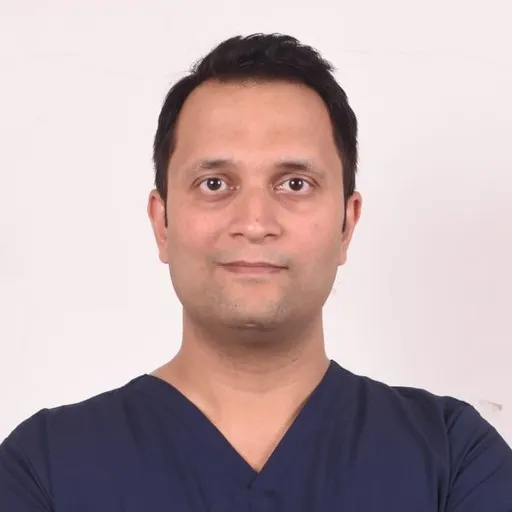
About the Author
Dr. Shailesh Singh is a Senior Consultant Interventional Cardiologist with over 12 years of clinical experience. He specializes in complex coronary interventions including rotational atherectomy for heavily calcified arteries. He now practices at BLK-Max Super Speciality Hospital, New Delhi (formerly Consultant, Fortis Escorts Heart Institute).
Learn more about Dr. Singh →Need Expert Cardiac Care?
If you've been told you have heavily calcified arteries, Dr. Shailesh Singh has extensive experience with rotational atherectomy and other advanced techniques. Book a consultation to discuss your options.
Hospital: BLK-Max Super Speciality Hospital, New Delhi | Formerly Consultant, Fortis Escorts Heart Institute
Medical Disclaimer: This article is for informational purposes only and should not be considered medical advice. Always consult with your cardiologist for personalized recommendations based on your specific health situation.